Edit: It was brought to my attention that Zack Morrison uses they/them pronouns and so the essay has been changed to reflect that. Also a few grammar mistakes have been fixed.
Don’t stop me if you’ve heard this one. A kid moves to a new town and if that wasn’t stressful enough, he starts to suspect that something weird is going on. He’s seeing creepy floating blobs, something that went after him in the middle of the night, and even what looks like a serpent flying past his window at school. Luckily for him, his new school is home to the Activity Club: a group of young people and their teacher who can not only see spirits, but also fight them. This is a set up you’ve probably seen in a million different manga/anime/Saturday-morning cartoons, but that doesn’t stop Paranatural from feeling new. From its dense and layered style of comedy to the way it plays with genre conventions, this is a comic that shows just what kind of stories webcomics are capable of telling. So, let’s grab our tools, channel our spectral energy, as we look into what makes Paranatural so worth reading.
Comedic Density
Above all else, Paranatural is a comedy and, considering its premise, you’d expect most of the punchlines to be about tropes and cliches. That’s certainly one ingredient, but the stew is much more varied and complex than it first appears. Zach Morrison, the writer and artist, is an expert at cramming each panel with as much comedy as can fit. This is evident even in its early pages, like Chapter 1 Page 2:
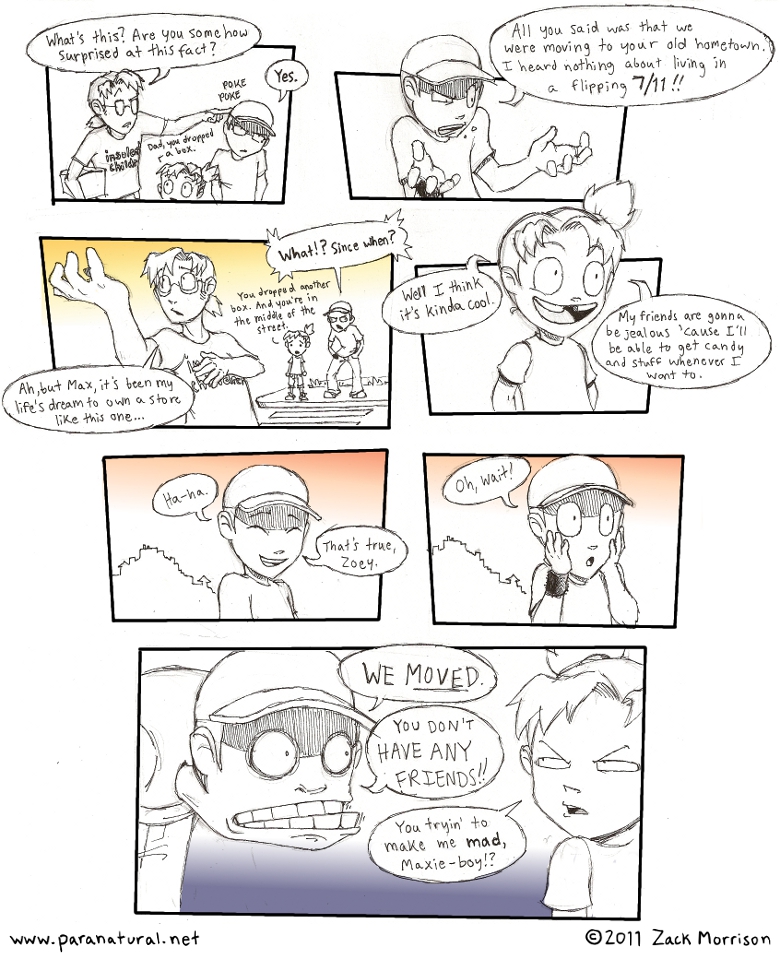
There are at least six different jokes happening on this page and it was hard to count because of how seamlessly they flow into one another, each joke building on the one before. One of my favorite examples of this is in Chapter 4 Page 21.
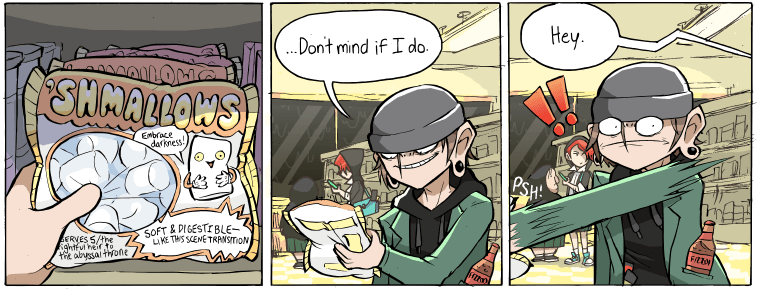
We start with the package of marshmallows, which has three different jokes on it, before we focus on the punk about to shoplift them. A text bubble coming from outside the frame appears, letting us know that someone new has entered the scene, which causes the punk to panic and try to put the package back.
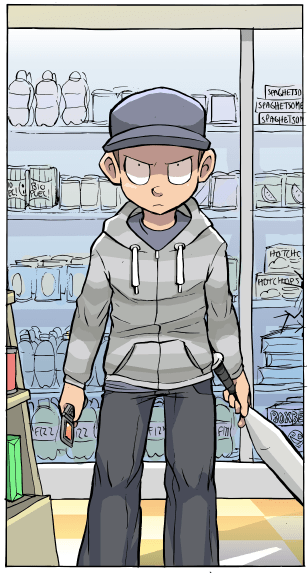
We then get this image of Max standing there with a baseball bat and a look that seems to say “shit is about to go down.”

Except no, he’s actually just calling the police.
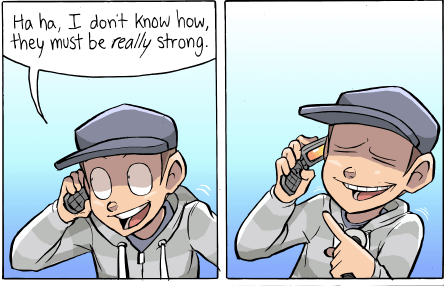
No again, he’s just bluffing. He even takes a moment to laugh at his own dumb joke.
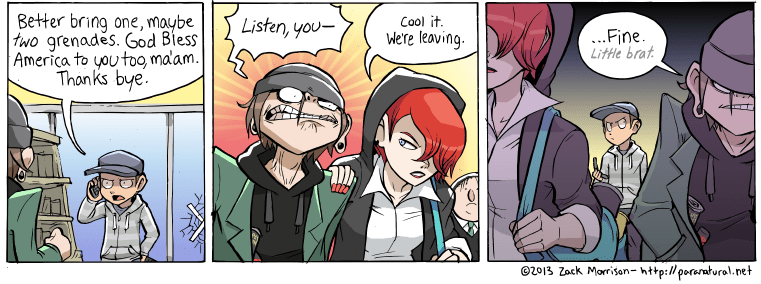
We then get these final panels that build on Max’s bluff, before the punks decide to walk away.
I know breaking all of this down ends up ruining the magic of the whole thing, but I want to show just how complex the comedy can get. Jokes are prevalent in every page and panel and they’re so varied that you never get tired of them. Rather than just throwing jokes at the wall to see what sticks, each one builds on the one before to amplify the comedy and make it all flow like water. Beyond making you laugh, the comedy gets across a lot of important information about Max, the punks, and how each of them thinks. We’ll get more into comedy and the characters later, but what I really want to focus on is how this complexity is made so readable.
Visual Clarity
Even when the comic was just starting, Morrison showed that they have a real talent for sequential art. Their clean and expressive character designs had so much life in them, and when they started using color, the world really started to pop. However, what has always stood out about their work is just how dense with information their pages can be. That information could take the form of jokes, background details, or dialogue and often all of it happening at once. This runs the risk of being crowded, but Morrison’s panel layouts make everything digestible. They knows just how to guide your eyes from one panel to the next, whether using little visual clues to create a sense of motion from panel to panel, word balloons that stretch over multiple panels, or even having smaller panels that convey a character transitioning from one emotion to another. (Insert image) This firm grasp of the fundamentals also allows Morrison to push themselves in ways that I’ve never really seen before. Like these three pages from Chapter 5.
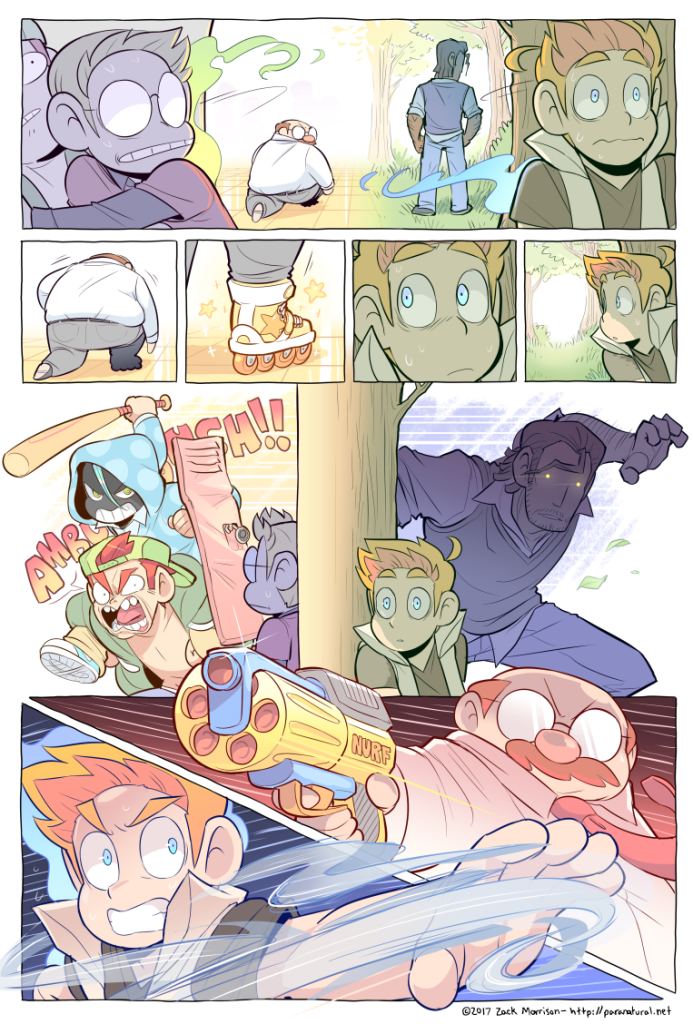
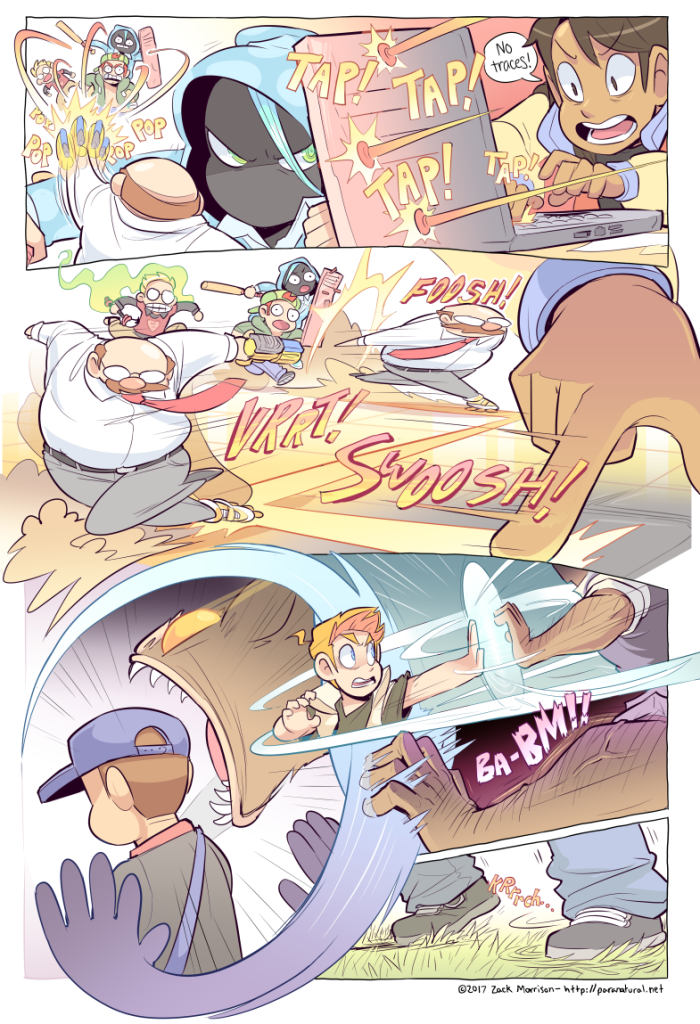
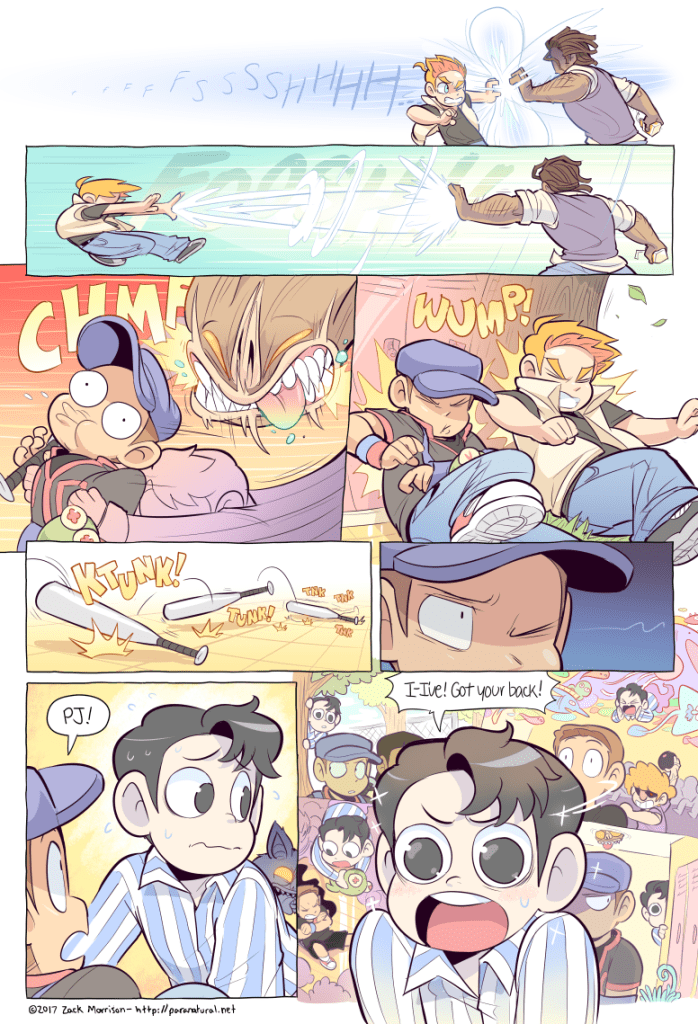
The point of these panels is to convey three different events happening at the same time and you really feel the same sense of momentum and tension happening in each of them. All sorts of little tricks are used here, like Ed and Isaac looking like they’re back to back, Starchman on roller-skates looking like he’s following Isabel’s finger over the keyboard, to even something relatively simple like using the line of Isaac’s wind blast to move the eye in the direction he’s being thrown. This is the kind of work that should be taught in sequential art courses, it’s so fantastic. Though this isn’t the only way that Morrison makes use of their medium to its fullest.
There is a lot in Paranatural that can only really be done in a comic. There’s plenty of jokes I could see being translated to an animated series, but how would you translate this gag:
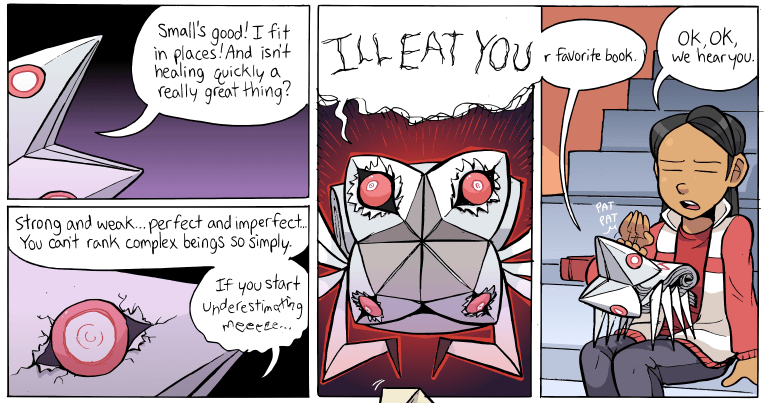
Maybe with some creative editing and pitch perfect voice work, but I don’t even want to imagine the sheer number of takes you’d have to go through just to get the timing on that joke right. This is a small moment, true, but they can be found all throughout the comic. Tiny moments that show Morrison has a special grasp of their chosen medium and how to leverage it for all its worth. Text bubbles that interact with the world like physical objects, sound effects following the motion of the characters, and the huge number of sight gags involving the various spirits of the world. Also, did I mention the spirit languages? Like the one that uses vague outlines of letters to form words or this skull and bones language that requires you to look for certain words within past pages? Yeah I don’t even want to think about what trying to translate that to another medium would look like.
Though what really makes the art of Paranatural so stand out is seeing Morrison find their voice as an artist in real time. I mentioned before in my “Why Webcomics?” essay that this is something I love seeing in all webcomics, but Paranatural is unique in that Morrison was already an impressive talent so their evolution isn’t just them getting better at the fundamentals, but experimenting with different techniques. This can be seen in the myriad of differences from Chapter 4 going into Chapter 5. The line work on the characters has more edges and the colors tend to be a bit more subdued in 4 than the much rounder and brighter feel of the artwork in 5. Moving on to Chapter 6 brings a whole new shift as the darker color tone of 4 is combined with 5’s rounder characters to make something that has a very different feel. Morrison, as an artist, clearly loves going out of their comfort zone and trying new things to keep their story feeling consistently fresh with each new chapter. This talent has also led to them creating some of the most memorable and expressive characters in any medium.
The Lovely People of Mayview
Mayview is a town of weirdos, both corporeal and incorporeal. Even if they don’t get any lines, everyone feels lived in. To prove this, let’s play a little game called “Spot the Background Character.” I’m going to put up three different characters from the comic, two of them will have had names and more than 5 lines and one will just be an extra from a crowd scene. It’s your job to figure out which is the extra. Ready? Okay go!
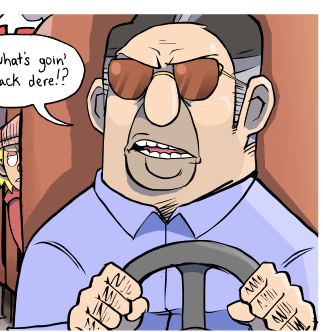

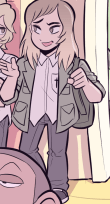
And the answer is…
All of them.
Now before you find my house and set me on fire for tricking you, let me explain my method. I did this to show just how much work goes into every character in this comic. Many of them given designs and details that most people would save for their main cast. Morrison will often focus on one or two details to exaggerate in a way that can tell you a lot about a character before they even say a word. Though it’s the way the characters “move” that really tells you about them.
Figuring out how to make still images feel alive is a challenge for any artist. Some try to find ways to make sure their characters always look impressive as still images, others go for extreme anatomical detail to make them feel solid. Morrison is unique in that their main focus is to imbue the same energy of an animated work into their still images. Keeping characters on model is thrown out the window in favor of squashing and stretching them almost to the point of making them look like they came out of a rubber hose cartoon. Some panels take the look of smear frames that trick your brain into thinking the character is actually moving. Sometimes characters devolve into abstract shapes to sell the extreme emotion they’re feeling in that moment. Just take a look at these pictures of the character Zarei:
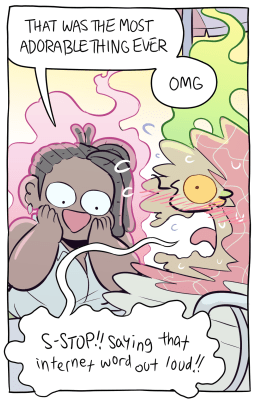
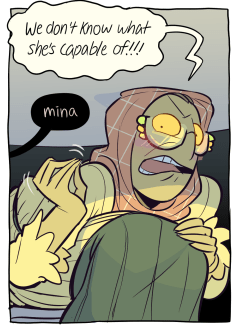
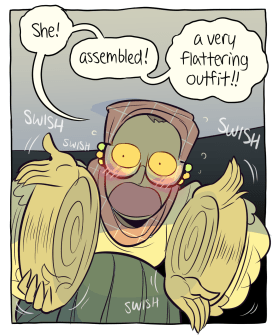
Part of the fun here is watching her normally stoic persona break down, but it’s the way she’s posed and the way she gestures that truly sells it.
What makes all of this work is that Morrison knows how to both bend their characters like rubber and have them emote like real people. For every goofy face there’s a quiet moment that manages to say so much with very little. It’s surprisingly common for Morrison to slow things down and capture a character’s more subdued expressions.
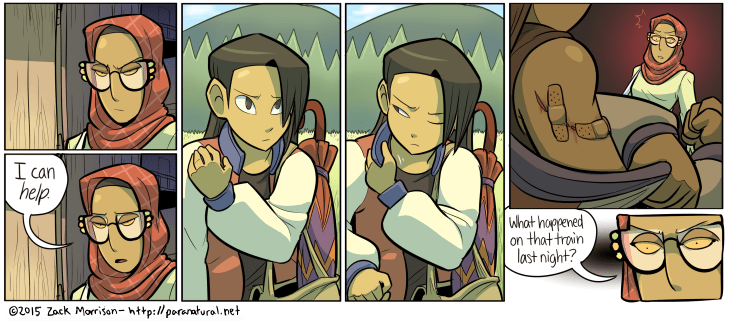
Whether they need to look like Looney Tunes or need to emote like humans, Morrison’s control allows them to go through a whole gamut of emotions. Though I believe that their real secret is their ability to contrast these big expressions:
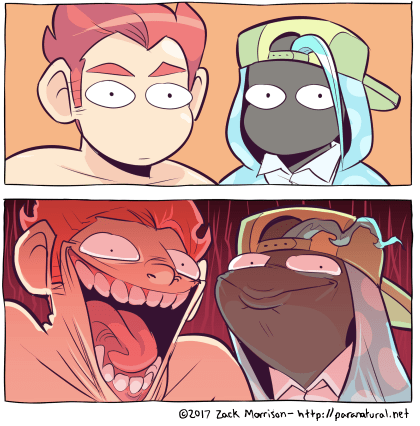
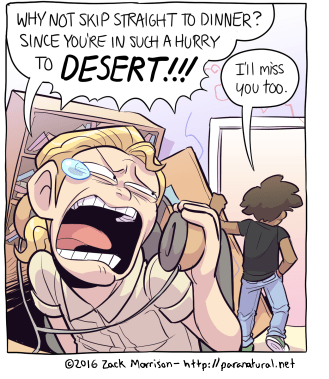
With their quieter ones to keep things from ever feeling one note and letting the story go into its more murky story beats. Though the real showcase of all of this can be seen in their spirits.
The ghosts of Paranatural are a showcase of what happens when someone like Morrison is able to do, pretty much whatever they wants. Each of them taking the principles that they use to make their humans expressive, but then taken one step further. Floating brains, living trains, whatever the fuck these things are:
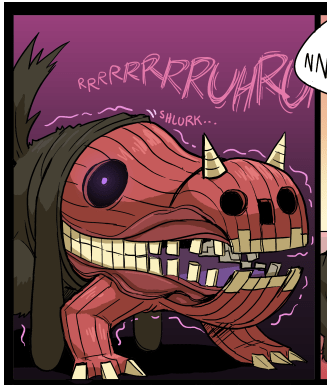
There seems to be no limit to the imagination gone into them. However, sometimes the most creative results can come from putting limits on yourself. Characters like Doorman feel like they started with some kind of prompt like, “How can I make a character with a doorknob for a face expressive?” Kind of like those animation exercises where you’re supposed to animate a bag of flour. The result is a character that manages to convey so much just with the way he’s posed in different panels.
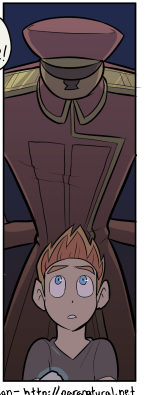
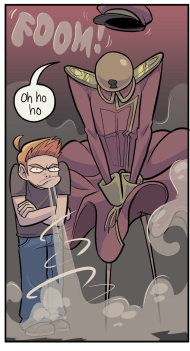
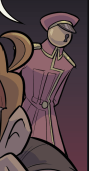
There’s multiple other characters that also demonstrate this, like Lucifer whose only an eye in a cage to Forge whose face doesn’t ever really change expressions at all. They’re a bit harder to make into reaction images, but they’re just as emotive as the humans and more out-there spirits.
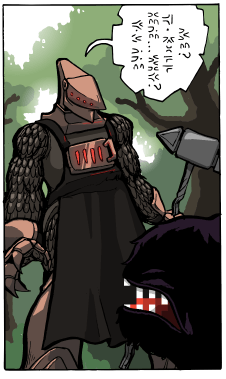
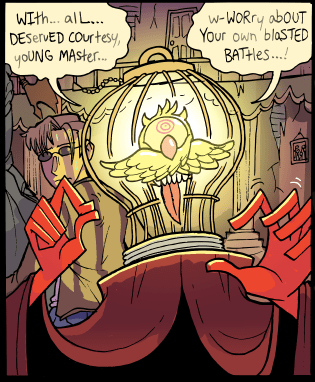
Though one of my personal favorite things about the spirits is just how many tiny details go into them. Like the palette’s on Muse, Doorman’s uniform looking like an actual door, and the individual scales on Forge’s armor. Hell, one of my favorite things about rereading the series for this essay was getting to see all the fun and creative background spirits. Stuff like this ghost cat, whose organs are other cats!
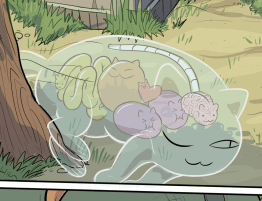
The sheer variety and creativity helps make some of the pages look like they should be placed in a museum and go a long way to making the world of the series feel just as deep as something like One Piece, despite Mayview being incredibly small in comparison.
The Town of Mayview
The town of Mayview is full of different factions, groups, and individuals with their own goals and agenda’s. Both humans and spirits all have their own stories happening at the same time, often independently of each other, and it’s a joy to try and untangle the massive web of relationships and conflicts. Like how Johnny Jhonny mentions in Chapter 3 that he and his crew are currently at war with students from another school who are revealed in Chapter 6 to be the same shoplifters we discussed earlier. While we spend the most amount of time with Max and the Activity Club, it’s made clear that they’re only a small part of the bigger picture. To the point where there’s apparently a Kill La Kill-style power struggle going on in their middle school that we don’t learn about until 165 pages in. This isn’t even getting into the stories that happen within these groups.
Whether it’s Zarei and Spender’s somewhat strained relationship with the rest of the Consortium, or Max’s burgeoning friendship with PJ, how these characters interact on the micro level is just as important as what they do on the macro. Just take a look at what was going on in the Activity Club before Max showed up.
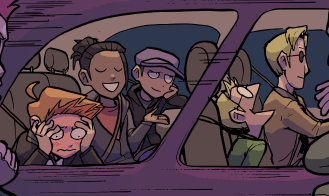
Isaac, the kid with the spiky hair, was involved in some kind of accident that no one seems eager to talk about. All we know is that he messed up in some way and someone got hurt. This has caused him to assume that Spender not telling him anything about how the Consortium operates is some kind of punishment that Isabel and Ed are going along with. However, Isabel later reveals that Isaac hasn’t even asked them anything, choosing instead to just assume the others are angry. A train of thought that has caused him to get angrier and angrier at the others, straining their friendship all the more. This is clearly a messy situation, but the specifics of it aren’t revealed right away. Rather, they’re given to the audience in pieces and clues that make the story flow naturally.
What makes learning about Paranatural’s history and world so much fun is the way Morrison gives information to the reader. This is where we circle back to his comedy and how it not only makes us laugh, but teaches us about the characters. Like take this little scamp here, Johnny Jhonny.
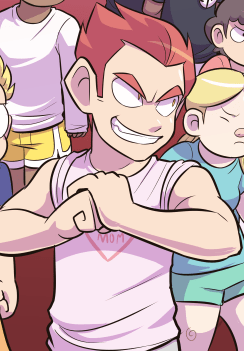
From his very first scene, where he describes getting into a fight with a guy weilding a stale baguette as a weapon, we know he gets into a lot of scraps. He also has a hair trigger temper, given that he spends the entire first chapter going after Max for simply insinuating that his hair was uncool. However, when Johnny finally gets to put the beat down on the new kid, his attitude towards Max goes from hostile to friendly, even if he does want to keep beating Max up.
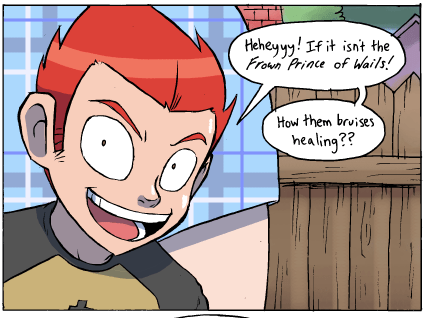
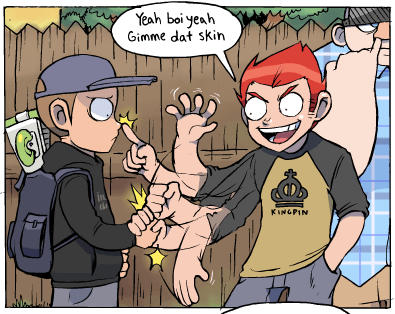
This whole sequence of events tells us that while he’s a bully, he’s not motivated by malice or greed, he just loves fighting and getting positive reactions from his crew. Each joke involving him comes from his desire for fights, petty retribution, and even how much he cares about his friends.
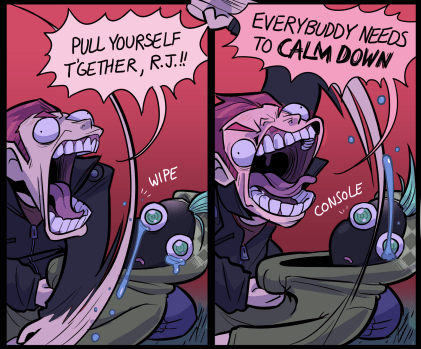
In turn, it all comes together to build a clear picture of who he is and what makes him tick, as well as how he changes and grows throughout the story.
This “comedy from character” method can be seen all across the cast. Like how Isabel smacking her spirit for misbehaving is shown to come from her grandfather’s teachings or how Isaac’s overdramatics, like using books to create letterboxes, are an extension of his tendency to act out. This method of comedy not only gives us important information about the characters, but allows for a lot of different kinds of comedy to come into play. The information then sticks to your brain better because of how damn funny it was.
While a lot of information about the world of Paranatural is communicated through visuals, there are moments where info is dumped. However, these moments never feel clumsy or out of place, often feeling like natural conversations the characters are having. Part of this is because the characters talk like they normally do instead of like they’re reading off the wiki. Other characters will often interrupt with comments, questions, and sometimes just to make a jab at whoever’s speaking. The person talking isn’t always giving the full story either. They’ll often describe the broad strokes of things and leave the smaller details alone or they might be holding back information. The characters, even when delivering exposition, always stay in character allowing these scenes to hide the fact that they’re mostly happening for the benefit of the reader.
An example of all of this working together happens in Chapter 5 where Isabel talks to Max about something that happened before he joined the Activity Club. We can tell that whatever happened was recent enough to still hurt because she’s reluctant to go into specifics and lines like “I think Isaac tends to, like, play things out in his head too much?” The “like” and the question mark at the end makes it feel like something someone would say and not like Isabel’s reading from a script. They also aren’t having this conversation in a blank room, they’re walking to school and even having crazy encounters with spirits during the whole thing. There’s even some pretty great jokes snuck in there that add a bit of levity to what’s obviously a heavy subject. The fact that she’s so reluctant to go into specifics then makes the reader fill in some of the blanks on their own using information they’ve already learned about Isaac. This is a big reason why I love this webcomic, because when it has the chance to take the easy, tropey path, it finds a way to do something much more interesting.
Playing Your Tropes Right
So it should be obvious by now that the series love to lampshade and lampoon tropes common to “supernatural school club” stories.
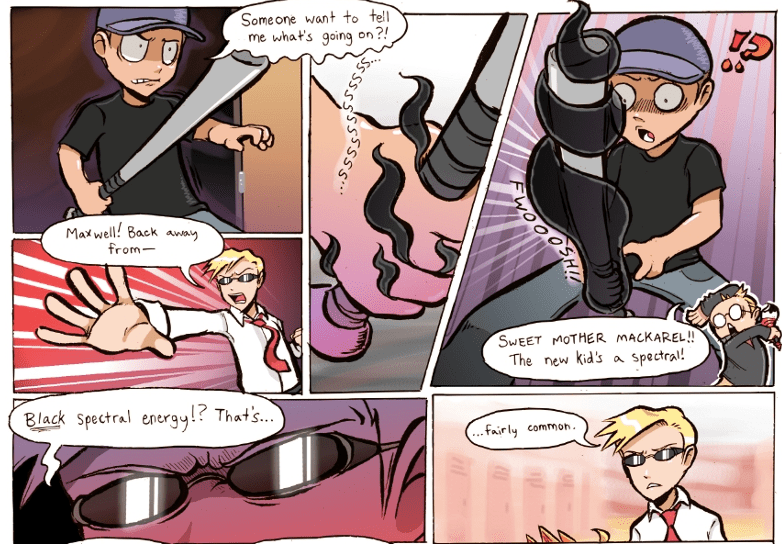
However, like the best of parodies, it’s clear that Morrison loves what their mocking. They know the expectations people will have coming in and then uses that as shorthand to get some of the best laughs of the series. They’ll also create characters that act as direct contrasts to other examples from the genre, such as Max, our main character.
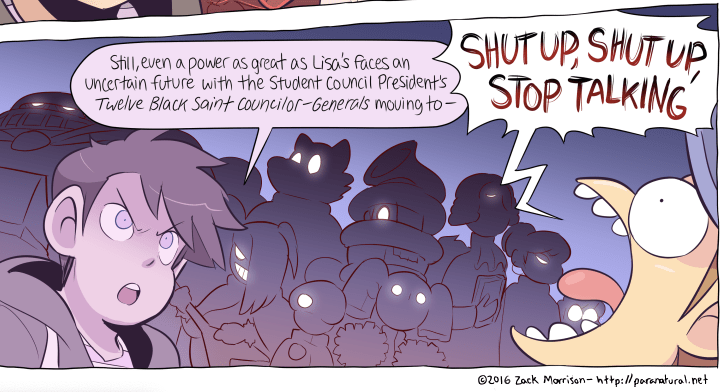
From his appearance, he certainly doesn’t seem like the kind of guy who’d star in this kind of story. If anything, he looks more like either the rival character or even just someone from the background. His attitude towards everything going on around him sells this.
Rather than being excited, or even mildly interested, about the world of spirits, Max makes it clear that he’d rather just be left alone to live his own life and not get involved in this anime bullshit. Rather than an optimistic spirit, or drive to be the very best like no one ever was, he makes it through the day with snark and cynicism. He throws shade at everyone around him and does his best to disrupt people’s attempts to look cool or impressive. This runs of the risk of making him seem mean or shallow, but all his comments are well aimed and show that one of his strengths is his ability to cut through other people’s posturing to get right at what makes them tick. It’s also clear that this doesn’t make him automatically better than everyone else. The image at the start of this section shows he’s no chosen one and the other characters consistently outperform him in battle. This all goes towards making Max work, not just as a tool to dismantle the tropes of the story, but as a character in his own right.
This is where the comic’s approach to tropes changes in way that allows it to tell some great drama without having it clash with the comedy. While many of the characters are created with a certain trope in mind, there is more to them than just being some flavor of subversion. Characters like Forge, who looks like he’d be throwing down with Yusuke Yurameshi, is shown to be someone who wants to make up for his past deeds by throwing in with a good cause. Part of what makes this all work is that the same parts of the character that are used to fuel their comedy also works to help fuel their drama. An excellent example of this is Mr. Spender.
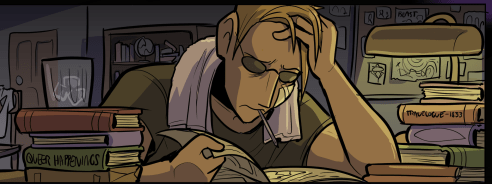
However, to go into detail means going into some heavy spoiler territory, so I’d really recommend that if anything I’ve said up til now has you interested, you should really check the comic out and then come back. Or at least skip down until you’re past the spoiler section.
*Spoilers begin*
Spender’s introduction to the story is different from everyone else’s at that point. It takes place in a dark room that hides his face, and the reason for the darkness isn’t because the power is out or anything, it’s because he’s looking for a specific kind of spirit.
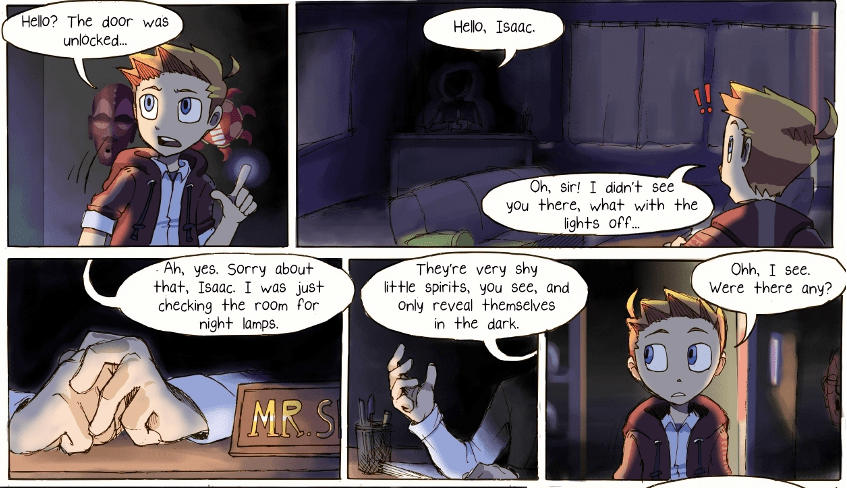
This means that when he talks about finding Max and giving him the tools he needs to adjust to his new situation, we’re led to believe that he knows what he’s doing. Even when jokes do start happening, they happen because Max isn’t playing along, not because of Spender being incompetent. In other words, while every other character has felt like a subversion of a particular trope, Spender feels like he real deal: The Wise Mentor. Sure, one that the story isn’t afraid to make fun of, but there have been plenty of characters like Master Roshi or Uncle Iroh who can be incredibly wise and silly at the same time.
However, near the end of chapter 3, we get this:
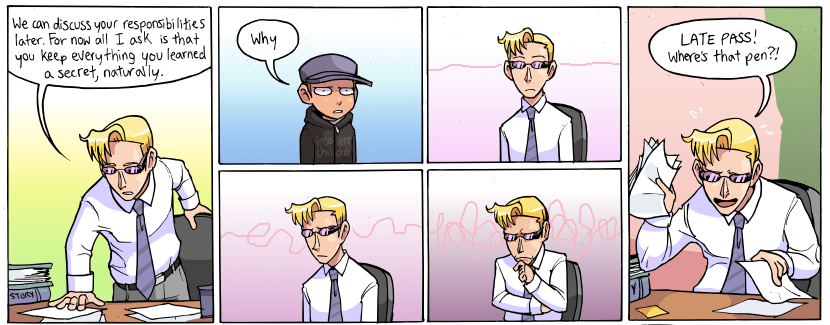
This isn’t just a jab at urban fantasy set ups, it shows that Spender isn’t as in control as he’d like others to think. This gets compounded later on when we see him visit his higher-ups at the Consortium. There, Boss Leader, while giving him some respect, continuously pushes his buttons and messes with him in a way that only Max has done up until now. Speaking of, Max’s jabs at Spender go from simply not wanting to be a part of any of the Activity Club’s weirdness to actually taking a shot at Spender’s image.
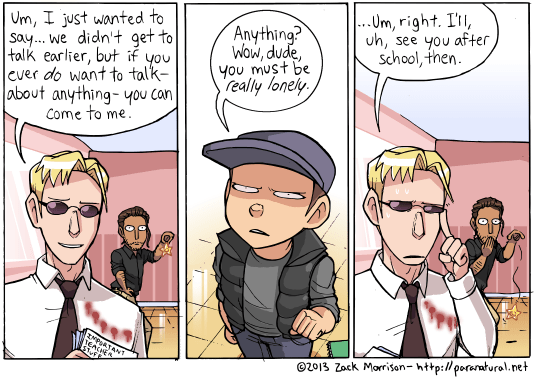
That’s not just a throwaway line, that’s a statement that hits harder and harder as the story goes on. Until every bit of Spender’s “I know what I’m doing” image is destroyed.
For the back half of Chapter 4 and most of Chapter 5, the idea that Spender has any idea what he should be doing is dismantled, but not in a “hee hee, he’s so stupid” and more in a “oh shit, he has no idea either.” He lets Forge rile him up, abandoning Max and Isabel with an enemy they aren’t prepared to face. He continues trying to fight Forge even though it’s clear he’s outmatched and the kids are in trouble. After sustaining great injuries, he reaches inside himself to use some kind of power that his spirit, Lucifer, warns him against unleashing. This proves to be the worst of many mistakes made that night when whatever he tapped into tries to escape. Worse yet, Isabel loses her own spirit during the fight and Max was nearly killed by the out of control Spirit Train.
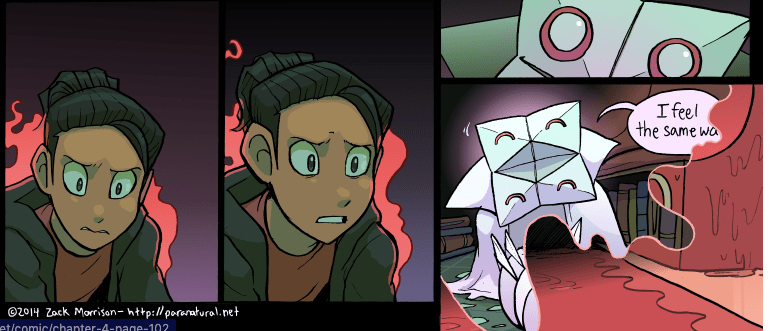
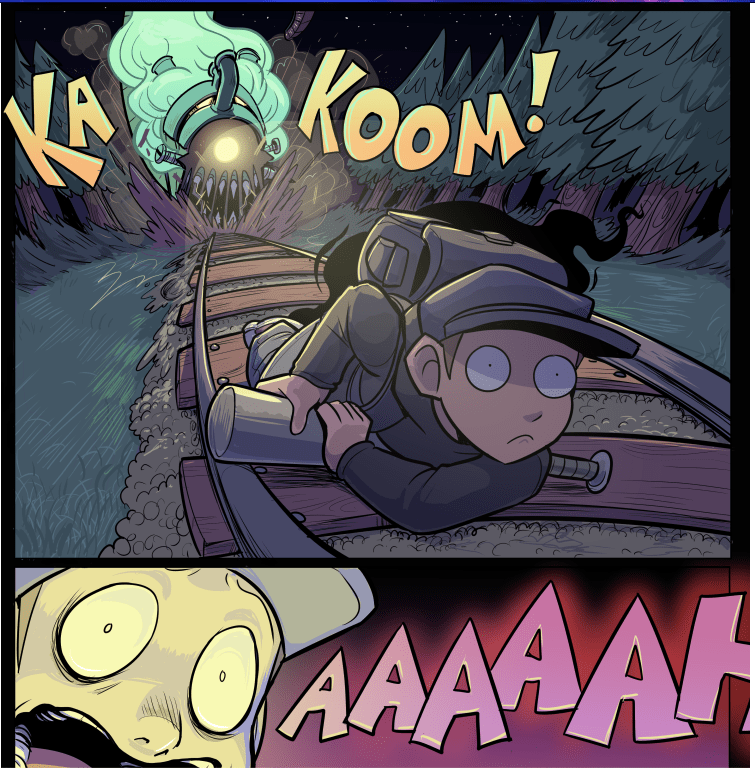
What he did in this chapter has serious consequences for all the characters involved and it’s not even his first, or last, batch of bad decisions.
When we next see him in Chapter 5, we learn that he’s refused to ask for help from his old teacher, Dr. Zarei, and anyone else that could give it. The injuries Forge gave him are still still there and he lets his pride and shame keep him from getting proper help. The thought of asking Isabel about how she’s feeling after losing his spirit doesn’t dawn on him because he’s too busy dwelling on his own problems. Though it’s his argument with his spirit that truly hits home what the story has been trying to say: Spender has no idea what he’s doing, and he never did.
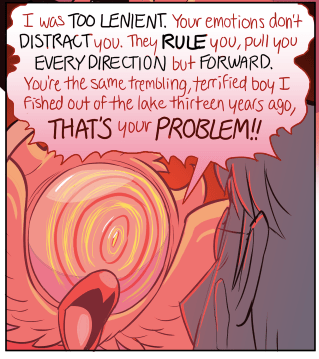
The bad decisions he’s made over the course of these chapters were never out of character for him and it seems that he’s refused to learn anything from them. Hell, the reason the Activity Club exists in the first place isn’t to train young Spectrals, it’s because Spenders lonely. Despite all this, Isabel still looks up to him and puts her faith in him. Even after Max points out he’s hiding information that could help them. Really, the saddest thing is that the spirit taking control of his body throughout this chapter acts like a better mentor to her than Spender has the entire comic.
Spender isn’t a trope, he’s not a wise mentor, he’s not even a good teacher, he’s just a person. A funny, sad, but well intentioned person. Someone who, when faced with difficult choices, has consistently chosen easy solutions that have been shown time and time again to not work. He pushes the people who could help him away and ends up letting down those that are still with him. It’s made clear throughout the story that many of the conflicts faced by the Activity Club are due to mistakes Spender, and others, have made and it’s likely that those mistakes will continue to be problems. All problems caused not by someone who was looking to hurt others, but who let his good intentions blind him to the fact that he was paving the way to Hell.
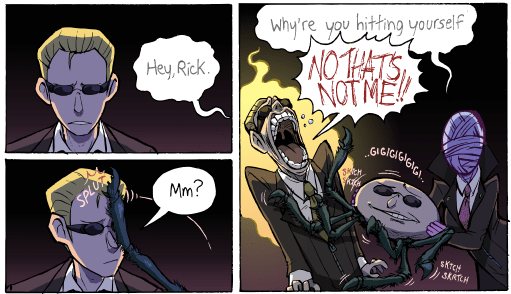
All of this from a guy who gets involved in scenes like this:
*Spoilers end*
Conclusion
I spent a big chunk of this essay talking about one character because, to me, he exemplifies everything that I love about this comic. How it’s a story that manages to make me laugh and cry within moments of each other, and that only continues to grow and change. This is a story that could only be told as a comic and could only exist like it does as a webcomic. It provides a look at something that I always thought I knew so well and manages to breath new life into it. This is what makes the medium so special to me and why I decided to start this blog in the first place. I hope that I’ve at least convinced one other person to give this series a try, because it truly is one of the most unique works I’ve ever read and I would love to share it with others.
 The7thDraconian's Hoard of Stories